




















Keir Starmer avoids then shuts down our questions
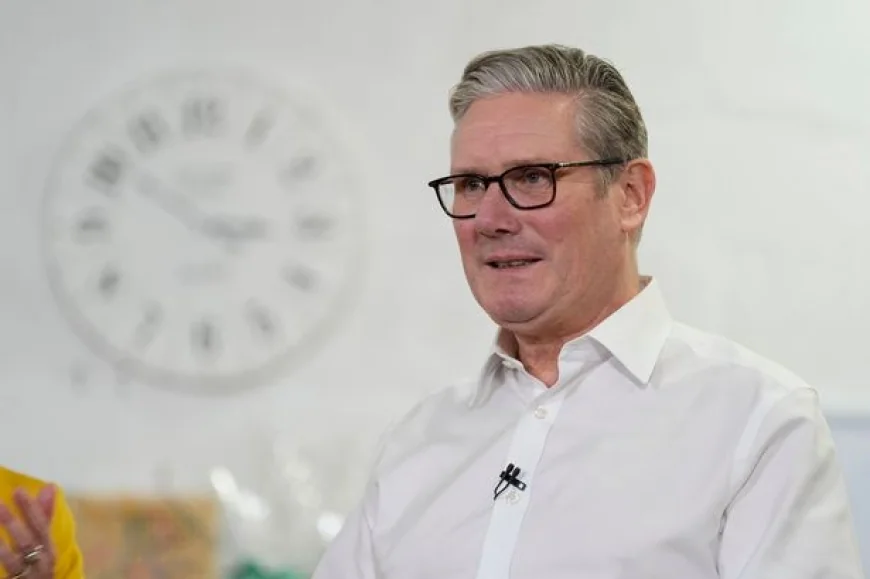
One of the most frequent criticisms of the two Labour leaders who between them hold the reins of power in Cardiff Bay and Westminster is that one isn't really interested in Wales and the other won't stand up to her own party leader. From missing HS2 billions to unfulfilled devolution aims, critics say there has been little evidence of the promised "partnership in power" between First Minister Eluned Morgan and Prime Minister Keir Starmer.
Those concerns could hardly have been better exemplified than in our interview of the two leaders together on Friday in Cardiff.
Not least in the bizarre moments that followed my attempt to question Eluned Morgan on accusations from within her own party that the UK Government has "attacked devolution".
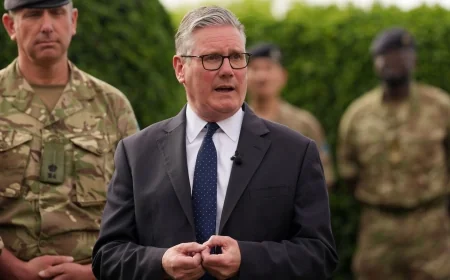
After Ms Morgan failed to directly answer, Sir Keir Starmer waved a hand between me and the First Minister. Spluttering, he called an end to my questions despite none having been properly addressed.
The pair were visiting Ely & Caerau Children’s Centre to talk about £2m in funding from the Welsh Government to revamp the site, as well as the UK Government's new child poverty strategy.
After arriving I was asked to sit in a festively-adorned room alongside two radio reporters ahead of a "huddle" in which we would ask questions. For the next two hours, we waited in the room while broadcast media were allowed to film the two leaders walking through the rest of the centre and meeting families. When we asked UK Government aides why we couldn't film this, there was no clear answer.
The aides were very inquisitive about what I'd be asking the leaders. When I mentioned four general themes, the aides initially gave no objection to me scrutinising the politicians on those issues — which were, by the way, the accusations of devolution rollback; the backlash against plans to scrap jury trials in many cases; the horrifically dilapidated state of the University Hospital of Wales; and reports Mr Starmer is planning to offer the controversial former First Minister Vaughan Gething a peerage.
After the leaders had given on-camera interviews to the BBC and ITV, the two radio reporters and I were ushered into a small room where aides said the politicians would be entering shortly. The aides explained we would actually only be allowed one question each. And we would not be allowed to film.
Despite forceful objections from me and the radio journalists, the aides stuck to their position that we would only be able to record audio. Why couldn't we just film the interview on our phones? "Because it's a conversation," said one aide.
"Conversation" would be a strong word for what came after the leaders' entrance.
I asked the Prime Minister: "Eleven Labour Senedd members have accused the UK Government of attacking devolution by bypassing the Welsh Government to fund town centre improvements. What is the point in a £19m expansion of the Senedd if you're going to cut them out of their own policy areas?"
This was in reference to an extraordinary letter that emerged earlier this week from most of the party's Senedd backbench, slamming the UK Government for directly funding Welsh councils to improve town centres despite regeneration being a power devolved to the Welsh Government.
The letter criticised UK Labour for "cutting out the democratically elected Welsh Government in a policy area that is fully within its remit", adding: "This is ineffective and wasteful, and no way to spend public money. If this was being done by a Tory Government, we would be calling for a judicial review."
Mr Starmer then launched into a long answer which failed to address the Senedd members' criticisms. Twice, when I tried to move him on to that issue, he cut me off.
"I'm a big believer in devolution and I think one of the best examples of devolution is when the First Minister and Prime Minister work together and deliver together," he said, before giving the example of plans for Anglesey to get a small modular reactor and artificial intelligence growth zone. He also mentioned the child poverty strategy, which includes savings on energy bills and abolition of the two-child benefit cap.
Conscious of my limited time, and with Mr Starmer already having spoken for 75 seconds, I tried to get a question in for Ms Morgan. After my first attempt was drowned out by the Prime Minister, I was eventually able to ask Ms Morgan about the meeting she recently had with Mr Starmer in which they apparently discussed the regeneration funding controversy.
According to a statement earlier this week from a Welsh Government spokesman, Ms Morgan had "raised concerns" with Mr Starmer about the powers the UK Government was using. I asked her what the outcome of that discussion was.
"Let me say that the difference between this Prime Minister and the last Prime Minister is like night and day," she replied. "He has given us back control of over £500m that used to go to the centre and is now going back to Wales."
I tried again. "Did he tell you he was going to bypass the Welsh Government?"
She repeated: "He's given us back control of over £500m that previously the Tories were trying to direct to the centre. That shows you the difference."
I reminded her: "You said you've raised concerns. Did it make any difference?"
This was the point at which Mr Starmer reached out a hand and voiced his objection to me getting any more questions — or, seemingly, any answers at all.
After the radio reporters were allowed one question each, the leaders left, and a sheepish-looking aide took our (quite extensive) feedback on what could have gone better.
For the network TV journalists filing evening news packages on the child poverty strategy, the event may have worked out fine. But for the Welsh media, who do not follow the Prime Minister around every day, and have serious questions to ask him about Wales, it didn’t.
If the Prime Minister had a track record of showing he understood Welsh issues and the role he can play in addressing them, or if he had a strong record of facing up to questions about these issues, none of this would matter as much.
But on issues from rail funding to devolution, he has shown little interest in Wales. Rather like our questions, it is starting to seem like Wales is just a bit of an annoyance to Mr Starmer, except of course where it can be a convenient backdrop for a carefully choreographed press event.
I left the children's centre thinking about the contrast between this encounter and my recent interview of Reform leader Nigel Farage during his party's ill-fated by-election campaign visit to Caerphilly.
Yes, Reform's treatment of the press has been alarming, including an interview ban on local newspaper reporters in Nottingham and bizarre legal threats to journalists at NationCymru. But it should also be noted that Mr Farage took questions on camera in Caerphilly from us and various other news outlets, giving each at least three minutes, and answering questions directly if not convincingly.
More relaxed communication, rather than putting up needless hurdles to evade scrutiny, might be something to consider for Mr Starmer as his party plummets in the polls.
What's Your Reaction?
 Like
0
Like
0
 Dislike
0
Dislike
0
 Love
0
Love
0
 Funny
0
Funny
0
 Angry
0
Angry
0
 Sad
0
Sad
0
 Wow
0
Wow
0