
























Welsh pensioner 'made to feel like criminal' at airport security

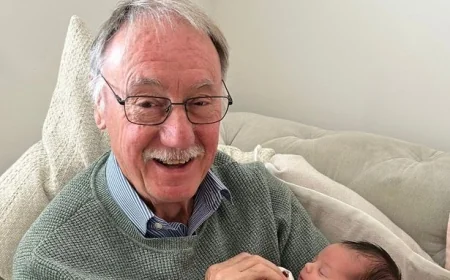
A pensioner has claimed she was left distressed after an experience at Manchester Airport that she says made her feel humiliated and exposed. Phyl Oliver, 81, alleges she was "treated like a criminal" during security checks because she wears a colostomy bag.
Colostomy bags, which collect bodily waste following surgery, are subject to checks to ensure they are not being used to conceal prohibited items. However, Phyl - a regular traveller - claims not all airport staff are sufficiently trained to handle such sensitive situations discreetly, particularly since the introduction of newer scanning technology.
Phyl, who lives in Llandudno with her husband Alan, a retired Mersey Tunnel police officer, underwent surgery for a cyst around 25 years ago and says she has travelled regularly since with few issues. But she claims that in 2025 she encountered problems at Manchester Airport on two separate occasions.
She alleges that when she walked through the scanner, her colostomy bag appeared clearly on the security screen.
"When you pass through their scanners, the bag shows up on staff screen as a big orange blob," said Phyl. "I was horrified when they began shouting out, 'colostomy bag!'
"For some bag wearers in a public queue, this could be embarrassing – imagine if you were a 14-year-old boy who's just undergone surgery, you'd be mortified.",
"I was then marched off to a private room with two members of staff, where I was asked to reveal my bag. As this is worn under my clothing, it can't be done without undressing. After splaying my legs I was asked to feel under my bag - they want you to do this so they can test your hands for traces of drugs or explosives.
"Although the testing was relatively quick, I felt humiliated. And for what purpose? I'm an 81-year-old woman while my husband is aged 84 and carries a sleep apnoea machine - what are the chances of us being international terrorists?"
Recently, computed tomography (CT) scanners have been introduced at UK airports. These devices utilise 3D imaging to generate detailed visuals of carry-on items, enhancing the detection of prohibited objects.
Artificial intelligence is also used to expedite the process through threat detection algorithms.
However, these new systems have led to passengers with colostomy bags being flagged more frequently for additional screening. Efforts are also underway to refine detection algorithms for individuals with limb abnormalities and wheelchair users.
When further screening is required, manual checks are performed. Aviation Security Officers (ASOs) conduct full-body searches using hand-held metal detectors and pat-down procedures.
In either a private room or the Central Search Area, stoma bags are "visually verified".
Passengers are then requested to touch their own stoma bags and lift them for inspection. This procedure is followed by explosive trace detection (ETD) tests on their hands.
Manchester Airport maintains these inspections are carried out in methods intended to preserve the "safety and dignity" of travellers. Personnel emphasise that airport security is critical and stoma bags could potentially be exploited by "bad actors" for either drugs or explosives.
Phyl, who was raised in Wallasey on the Wirral, previously worked as a section head at the former Royal Insurance operation in Liverpool. She argued the new CT scanners and security procedures were overly intrusive.
Her complaint mirrored the experience of a Cornish mother battling cancer who travelled through Manchester Airport last summer.
"In the last 25 years I've never had to physically show the underneath of a bag for inspection," Phyl explained. "I've been through Liverpool, Heathrow and Birmingham with only kindness and respect shown.
"After I had my life-or death operations I suffered from post-traumatic stress syndrome. With these new processes, this now resurfaces.
"The first time I went through Manchester, en-route to southern Italy last May, I was shocked by what happened. I was disappeared from my husband and forced to leave all my valuables at the screening desk. I had no idea what was happening.
"The second time, when travelling to Riga, Latvia's capital, in September, I was ready for them. I demanded to see the airport manager: he was a big man, and I was like a little terrier biting at his ankles!
"I told him my treatment was the equivalent of me asking him to drop his trousers, to bend over and let my husband inspect his underpants. I think he was a little aghast at the idea.
"In the terminal there are signs asking passengers not to abuse staff. I told the manager the next time I came I'd be wearing a sign asking staff not to abuse stoma bag passengers."
Recent border security enhancements are part of a nationwide infrastructure programme mandated by the Department of Transport and supervised by the Civil Aviation Authority (CAA). In response to enquiries from the Ileostomy and Internal Pouch Association (IA), the CAA confirmed that individual airports are responsible for designing upgrades and training personnel.
Across the UK, the introduction of CT scanners has been spearheaded by smaller, regional airports. Major international hubs, including Manchester and Heathrow, have lagged behind due to logistical challenges – they operate far more security lanes.
Complaints have already been raised by stoma bag users at airports such as Belfast, Luton and Cardiff as security teams adapt to the new scanners and procedures.
Phyl, a member of St Paul's Church, Craig Y Don, said: "I've been told I don't need to undress but where do they think my bag is attached? It's beneath my trousers. During my Zoom interview (with the airport) this was contested – so I stripped off to show the reality.
"My condition should not be exposed to the public. Nor should I be separated from my valuables when I'm taken to the private room.
"During my Zoom call I was told five passengers had been inspected that morning, before 10.30am. So it's affecting a lot of people. In which case, wouldn't specially trained sniffer dogs be quicker? They'd certainly be less intrusive."
Manchester Airport is hoping to draw upon the experiences of those affected in order to refine AI algorithms and enhance security procedures. Phyl has been invited to contribute her perspective and participate in a learning session.
Amongst potential adjustments being considered, the airport is evaluating whether detaching stoma bags prior to screening could prove beneficial.
In certain instances, visual inspections of stoma bags can be conducted simply by lowering trouser waistbands. Where practical, passengers are encouraged to empty their bags beforehand, as scans typically raise fewer concerns when bags are empty.
The IA charity also advocates for the use of Medical Device Awareness Cards (MDAC) - those carrying these cards may face reduced scrutiny at certain airports.
Phyl has held a MDAC for 25 years - it specifies that a qualified medical professional must be present during body checks. She remains hesitant about participating in a learning session without assurances that any improvements will be consistently implemented across the board.
"They said I could attend their VIP terminal - the one they use for celebrities, stars and dignitaries," she explained. "I don't want to be plied with champagne and fobbed off – I want to raise awareness and improve airport checks for all stoma bag passengers."
Phyl revealed that Wallasey MP Dame Angela Eagle is championing her cause, and claimed that Baroness Tanni Grey-Thompson, the disability rights campaigner, had voiced her outrage over the treatment she received. In correspondence to Ms Eagle, the Department for Transport stated that airport security measures are being strengthened following "multiple attempts to attack aviation using devices concealed on the person".
The department explained that airport staff should receive "disability-equality and awareness training" to guarantee that passengers with stoma bags or other medical equipment are searched "appropriately and sensitively".
Aberconwy MS Janet Finch-Saunders has also stepped in to assist, arranging Phyl's Zoom meeting with the airport. She has even volunteered to drive her constituent to Manchester for the training session.
"I'm very supportive of Phyllis' situation," she stated. "But I've also been reassured Manchester Airport is taking her complaints very seriously, and is intent on implementing precautions in response to my constituent's concerns."
Major airports have been granted additional time to install expensive CT security scanners, a measure aimed at removing the 100ml liquid restrictions.
Currently, only Heathrow and Manchester – where CT scanners have not been fitted across all lanes – still require liquids to be screened separately through security.
The IA is campaigning for a uniform approach across all UK airports to guarantee that the rights of passengers wearing medical devices, such as stoma bags, are upheld. The charity is gathering testimonies from travellers who believe they have been treated unjustly - you can access this here.
A Manchester Airport spokesperson said: "We are committed to making sure all passengers feel respected and supported throughout their journey while at the same time meeting necessarily strict security standards.
"Although these two priorities can sometimes be hard to balance, it is never our intention to make passengers feel uncomfortable."
According to Colostomy UK, approximately 200,000 individuals across the UK currently live with a stoma bag, representing roughly one in every 335 people.
Phyl added: "Nobody wants to endanger anyone and we want to feel safe when flying. But my experiences have shown there are still too many uncertainties about airport security. I will not give up."
What's Your Reaction?
 Like
0
Like
0
 Dislike
0
Dislike
0
 Love
0
Love
0
 Funny
0
Funny
0
 Angry
0
Angry
0
 Sad
0
Sad
0
 Wow
0
Wow
0