


















She has watched democracy in Wales grow over three decades from the front row
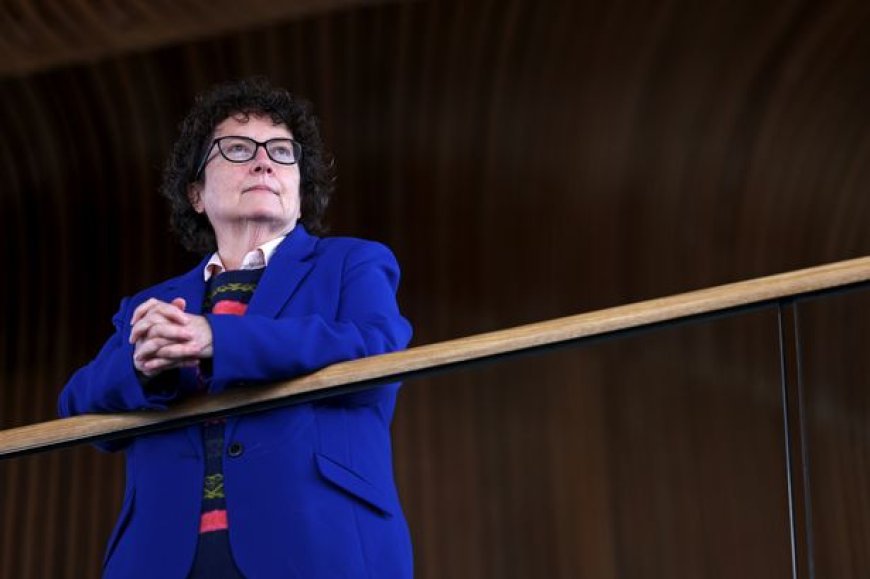
For someone so intrinsically associated with Plaid Cymru, it's a genuine surprise when Elin Jones says her first attempt at winning an election was as a Conservative candidate.
It was 1983, Margaret Thatcher was Prime Minister, and in the school mock election at Lampeter Comprehensive she put her name forward for election, as a Tory. "Why?" I ask. "I have no idea," she laughs, "But I can tell you that it is one of the very few wins the Tories have ever had in Ceredigion."
A Senedd member since 1999, under the Plaid Cymru banner she's been mayor of Aberystwyth, chair of Plaid Cymru, she was rural affairs minister in the One Wales government, and since 2016 Llywydd, or speaker, of the Senedd, to name just some of the roles she's had under the Plaid banner. She has had two unsuccessful attempts at being elected party leader.
Next May she will be one of two people who has been in the Senedd since its first day in 1999 who will attempt re-election for a seventh time - the other being Lynne Neagle, the current education minister.
Yet, standing for election to Parliament - Welsh or otherwise - was never her plan. The devolution referendum fell during her spell as Mayor of Aberystwyth having been a town councillor for the five years preceding but "it hadn't actually crossed my mind to stand for Parliament, whichever Parliament," she says.
She had just "spectacularly failed" to become a county councillor. "I think I was fifth in the poll in Aberystwyth," she said. "The significant decision that allowed me to think about standing for the Assembly, as was, was when Cynog Dafis decided that he wouldn't put his name forward.
"People like Dafydd Wigley and Ieuan Wyn Jones, they put their names forward even though they were still MPs. Cynog decided that he wouldn't do that and he would allow somebody new to be elected in Ceredigion and that selection for the Plaid Cymru seat in 1999 was one of the most difficult elections I've been involved in because there were a lot of older, more experienced, Plaid Cymru members locally who also put their names forward. I was the young kid on the block," she said.
That spell is always talked about with excitement. "It was the time of Cool Cymru and everything seemed possible and then I woke up to the realisation that somehow when I'd been on Aberystwyth Town Council, it had more fiscal powers and the national Parliament of Wales that I'd just been elected to.
"Zero taxation powers at all, whereas the town council could charge a precept on the electorate. So it was the slow realisation for me that the powers here meant that we could talk ad infinitum about most things, but we could affect any change on very few.
"The politics of that period was so dominated by the struggle within the Labour Party in particular. Alun Michael had been elected as first Secretary, and his quite his particular way of continuing to work in the same mould as the Secretary of State and just consulting with members of his own party, members of the Assembly, rather than behaving as First Minister with a government,and then that government accountable to the Parliament.
"All of those things hadn't worked themselves out at the start," she said.
While she credits Dafydd Elis Thomas for the "really important role that he played" along with Rhodri Morgan in "delineating the course of this parliament and government" her bigger praise is for those behind the scenes.
"I think that this is generally a difference between some of the male politicians here and some of the women politicians here. The contributions when I think of the last 26 years and where the people who made many of the changes. They're not the first ministers or leaders of the parties always, but there the Jane Hutts, the Edwina Hart's, Jocelyn Davis of this world rather than the people who could reel off," she says.
"These are definitely people behind the scenes people and they were definitely people who got things done, they had no time for the performance politics and the show of politics. They just wanted to make sure that either policies, pieces of legislation, budgets were being passed. All of all of the important stuff that governments and parliaments do," she said.
"I've been one of those politicians that's been there or thereabouts around what's been happening and what's made things happen in this place for the last 26 years. And I only wish I had a better memory that I could recall it all.
"I'm also one of those people who's particularly bad at keeping records or diaries or anything," she said.
"There are politicians in this place who have meticulously kept their diaries or memories and written about the happenings of this place from their perspective and unless we're careful it's those perspectives that will last the next 100 years rather than the actual what happened or the mix of interpretations of what's happened."
Is it, I ask, that she just doesn't care about those often small battles" and what been has been and gone.
"Exactly. Too too busy, too interested in what's what's happening now, what's happening next rather than thinking too much about how we record about what happened then.
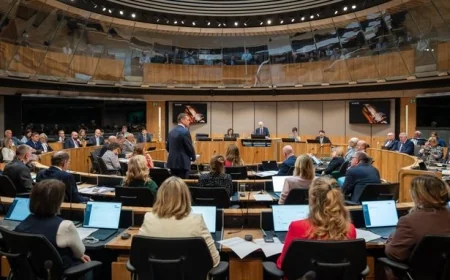
Since 2016, she has been the effective speaker of the house, so has been out of the show that is politics. She will not seek a third term in the presiding officer's chair.
"I found it quite difficult to adjust in 2016-17, when I first became Llywydd because I'd always taken a very active role in my own party and in committee work here, and I'd been a minister, so everything that I had done, I was no longer able to do in the same kind of way. I found being Llywydd quite a lonely place to be because you can't rehearse and discuss a decision you're about to take with politicians around you because they would influence you or seek to influence you depending on their political perspective.
"You have to take these decisions on your own," she said. "I found it difficult to get used to being solo, basically, but I've adjusted to that ten years later and now I'm actually looking forward to diving back into the pool of my own political party," she said.
"When I first decided and announced that I wasn't going to try be Llwydd any more, I kind of saw myself as a backbencher wanting to do scrutiny, wanting to do committee work properly. I've talked a lot in terms of Senedd reform on the need to improve scrutiny in the Senedd we need to up the game of all the scrutiny that happens here.
"So I wanted to just contribute to that in some way," she says.
But since then, the polls show her party may not be in opposition at all. Instead, she could be being looked at for a cabinet role.
"Politics is changing.
"Who knows, Plaid Cymru may not be in the position of being in opposition and may be a party of government in its own right or working with other political parties. So I may be a backbencher and a trouble maker for a Plaid Cymru government," she said.
Taking any ministerial job would, she says, "depend what it was."
"My mother has told me not to take the health portfolio, the only way she would continue to talk to me is if I promise now not to take health," she said.
Was standing again a dead cert, I ask. "I've been actively campaigning and involved in redesigning the Senedd, the Senedd that's going to be elected in 2026 will be a far different Senedd to the ones I've been elected to previously, given the numbers and the politics involved in that election. I wanted to be there in order to kind of see through the project that I've been involved in and see it from the perspective of a backbencher and contribute to making the project work and to ensuring that it develops the right culture into the next Senedd and then I'll definitely be thinking about whether I stand again or not," she said.
She does not plan, she says, to be the person in her party who will sit and reminisce about the days gone by. "I don't want to be that person within Plaid Cymru that hangs around for too long and and tells everybody 'we've tried this before and it didn't work'
"I want to just be a voice of experience within the group, that is going to be, probably, much bigger than it is today, but to also allow those younger voices to kind of feel their way and do their own thing.
"I having the right mix of experience and newness is something that's very that's very important for Plaid Cymru and the Senedd as well," she said.
Her party is doing well, partly at the expense of Labour. So why is Labour's vote plummeting? Was Labour's drubbing in the Senedd by-election in Caerphilly a one off?
"It's a perfect storm in terms of why people aren't as keen to support them as they were, the perfect storm of 26 years of Labour in government in Wales, and probably their biggest problem is the reputation and how let down people who voted Labour last year in the UK general election feel as a result of the Keir Starmer government.
"I'm just picking that up on the doorstep as I go around canvassing a new area for me, in Pembrokeshire that voted Labour in 2024.
"I remember the time, of course, when Labour was in power in the UK government under Tony Blair or Gordon Brown and Labour were in power here and it was always a far more difficult ask for Labour here.
"I remember listening to the kind of lead up to the 2024 election and politicians, Labour politicians in this place, saying how partnership in power would work wonderfully well for the people of Wales. And I just kept thinking back to that period of Tony Blair's government, thinking how challenging that time was for Rhodri Morgan and Carwyn Jones later, as the First Ministers," she said.
"It's very easy to romanticise," she said.
"I remember actually being in government because I was a minister in the Plaid-Labour government and the challenges with dealing with the Wales Office in the context of getting the referendum for 2010 at a time when Labour were in power, and there was a lot of strain in that relationship between Labour in government here and there.
"So the tensions we see today between Labour MPs and possibly Labour Senedd members on issues around devolution of powers, they have always been there," she said.
The other big change in dynamic, with the usual disclaimer about polls, is that Reform UK is projected to take a large number of seats. She is one of few voices saying the potential arrival of that new political group does not worry her.
"I think the institution is stable enough to deal with whatever politics the people of Wales decide the institution needs to deal with.
"It's for the people of Wales to decide what the flavour of the politics that's elected into this place in 2026 is.
"I think the parliament itself is strong and stable enough to deal with that and we have the parliamentary structures in place, the expectation on standards of behaviour from members, the mechanisms to deal with members when they fail to meet those standards of behaviour.
"When I'm reminded of 2016 and the Ukip members elected at that point, were they disruptive? I think on the whole they were more disruptive within their political party than the establishment of the Senedd.
"They obviously fell out with each other more than they ended up falling out with other political parties.
"So there's a lesson there probably. The established parties have their structures and the ability to select candidates that they feel are able to become political representatives of people in Wales.
"Ukip failed to keep that that gel that most political parties have.
"We'll see whether Reform behave any differently to that if they're elected in 2026."
"There's a high expectation on them to do the work that they've been elected to and that they're paid for from the public purse and I would expect anybody of any political party elected in 2026 to uphold that expectation."
"I'm pretty excited by the fact that we're turning a big new chapter in Welsh politics. The kind of political fragmentation that's happening in the way people are thinking about how they will vote in that election, that there's some jeopardy in the Welsh election that we possibly haven't felt enough of over the last 30 years.
"There's some excitement as to who the next government could be.
"I'm excited by that.
"I'm also excited by the fact that finally we will have a Parliament that has the capacity to do the work that it needs to do on behalf of people in Wales, because we were too small of a Parliament to start with. We've accumulated far greater powers than we had in 1999. We now need the capacity in the context of the Parliament, the people to do the work.
"We need the numbers of those to be the appropriate kind of number for people in Wales for the next century. This isn't a generational change, this is a one in a 100 years change."
But, I put to her, more doesn't necessarily mean better.
"What I think about the Senedd, some people make a point that "so and so isn't a particularly good performer". We know every single one of these 60 members, those of us who sit here and watch what's what's going on.
"In Westminster that are 650 MPs and even those who watch what's happening, such as journalists, they have no idea who half of those people are. There's no kind of light shone on them at all, so who knows whether they're good or bad," she said.
Her colleagues, cannot hide. "It's a fishbowl," she said. "In the House of Commons there's apparently close to 100 members who have no responsibility at all, whether in government or on committees in Parliament. That's a luxury that's certainly not afforded to members here," she said.
"We won't be able to hide behind the fact that we say that we're too few members in the next Senedd, the expectation on those members to perform to a higher kind of productivity, what will will most definitely be there. They need to live up to expectations."
What's Your Reaction?
 Like
0
Like
0
 Dislike
0
Dislike
0
 Love
0
Love
0
 Funny
0
Funny
0
 Angry
0
Angry
0
 Sad
0
Sad
0
 Wow
0
Wow
0