


















'I found out I had cancer through NHS app before doctors had told me'
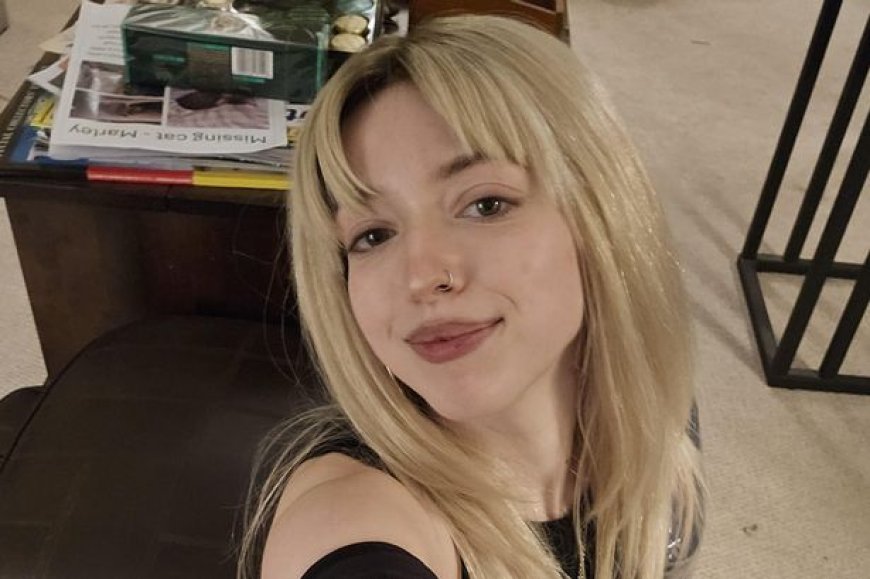
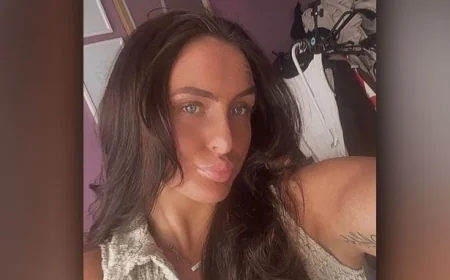
A young woman has shared the "horrible" way she says she discovered she had cancer – through a health app on her mobile phone. Freya Hodge had noticed a painless lump in her armpit, but wasn't overly worried, waiting four weeks for a GP appointment and carrying on with her life as usual, including her passion for rock climbing.
The 21-year-old was referred for an X-ray, with her GP suspecting a dislocated bone might be the issue. The surgery rang to arrange an appointment to discuss the results, but when Freya checked the NHS app on her mobile, she received a horrifying revelation: they had detected a tumour.
"I thought I had just been handed my death sentence," said the young woman from Uckfield, East Sussex. "I was so shocked – it didn't feel real."
Freya, who was holidaying in Norfolk with her family at the time, couldn't immediately attend the appointment and was assured of a phone call shortly after she received the initial message in April 2024. However, in the interim, she decided to check the app – and saw she could view the results herself,
The notes read, 'tumour characteristic of a malignant bone tumour - osteosarcoma'. Freya stated: "As I'm sure a lot of people who have experienced this will agree, when you're told you have cancer you immediately think you're going to die.
"I began Googling all the medical jargon I didn't understand in the hopes that potentially it wasn't what it looked like. Not once since I felt the lump on my arm did I think it could be cancer.
"I was 21, healthy and had done nothing in my life to warrant this happening to me and yet there it was, in black and white, as they say. That nauseating feeling of panic slowly filled my body; when you suddenly feel very warm and your heart starts beating rapidly.
"The 10 minutes I waited for that phone call felt like an age and I was just consumed by severe anxiety and panic – the feeling is honestly very hard to put into words. When the GP called, I don't remember a thing they said, I just cried.
"After the call ended, I went to my mum to tell her what had happened and collapsed in tears. I wish the results hadn't been on the app before I'd had a chance to speak to a doctor.
"It was a horrible way to find out." Freya didn't inform the GP that she had already read her results, and was supported by her parents at the time.
She revealed: "My mum has since told me that she had an inkling that the lump in my arm might be something serious but hadn't wanted to worry me whilst we were waiting for the results. My grandmother had actually passed away from a soft-tissue sarcoma around 10 years before, so my family was very familiar with sarcomas and how brutal they can be.
"It was still a shock for her to see it in black and white." Looking back, Freya feels her results ought not to have been made available on the app before she received a telephone consultation, given their grave nature.
She explained: "The X-ray results I received had severe implications and required almost immediate action. For that sort of scenario, I believe they should not be put on the app until a formal conversation/meeting with the doctor or consultant.
"I think the transparency of having the results of tests available on the app is extremely helpful, but only after they have been discussed with the patient first. I would have liked it told to me by a medical professional in a conversation, where it could be explained to me in a safe environment.
"I completely acknowledge that my GP had planned on doing this after the results came through but because I was on holiday it was not possible." Freya was referred for an additional X-ray, plus an MRI and biopsy.
Regrettably, due to an error the biopsy had to be repeated, postponing her official diagnosis for two weeks. However, in June 2024, her deepest concerns were validated, and Freya was diagnosed with a rare cancer called Parosteal osteosarcoma.
The emotional toll of her diagnosis struck severely. She revealed: "For about two weeks after the phone call, I couldn't shower because the sight of my own body made me upset. I felt it had betrayed me."
Freya was studying journalism at Sheffield University at the time but decided to return home to Uckfield so that she could be treated closer to home at the Teenage Cancer Trust unit for young people at UCLH in London, which specialises in cancer treatment.
She also had to make some critical decisions about her treatment and, due to the rarity of her tumour, struggled to decide the best course of action. She explained: "My options were doing chemotherapy or not doing it.
"However, because of the lack of research into the tumour type, my oncologist couldn't recommend either one. This was an extremely hard period for me as I had nothing to go off of – there was a chance that chemo would benefit me, but it wasn't proven, and the drugs I would be on were very intense."
Freya says she investigated her options 'furiously' and her oncologist managed to secure the views of five other oncologists from around the world, which influenced her decision to undergo chemo. She went on to have six rounds, and lost her hair – something the young woman found challenging.
She said: "When I was told the drugs I was going to be on would definitely cause me to lose my hair, I cried. As superficial as it sounds, my hair was such a big part of my identity.
"I had long, blonde, curly hair – a trait that had followed me since I was a toddler – and losing it felt like losing myself. Despite my love for it, I decided to shave my head a few days before my first chemo.
"It was important to me to be in control of the situation and take my hair before the treatment did." Like many individuals battling cancer, Freya found the mental toll of the disease and its treatment particularly challenging.
She further explained: "During treatment, I developed quite severe anxiety and panic. I began having panic attacks daily, some of which made me go into the hospital as it was the only place I felt safe.
"I was given counselling and began attending sessions weekly, but eventually it got so bad that I was put on medication. The nurses helped calm me down and put me more at ease – my interactions with them got me through those long days."
Freya's treatment commenced on 11 December 2024, and she was extremely ill in the lead up to and during the last Christmas period. She recalled: "The unit was decorated and there was a Christmas tree.
"That helped a lot as it was still Christmas, and it was good to still celebrate the holiday in that way. I had chemo for three nights and four days in that cycle.
"I was able to go home for Christmas, but because it was the first round of chemo, I felt very rough, and my body was struggling to adjust. One of the chemo's I was on promotes severe nausea, and so I was still throwing up at Christmas time. It was not fun at all. I normally go out on New Year's Eve, but instead my two best friends and I ordered food and watched the countdown on TV.
"It's not the typical thing a 21 year old does, but my friends made it bearable. My family and friends tried to make that period as perfect as they could, but I had an overwhelming feeling of dread and couldn't get excited as I knew I had more chemo to come in the New Year."
Freya's treatment concluded in March and she was overjoyed to receive the all-clear in May. She's now eagerly anticipating a healthier, happier Christmas this year. Freya shared: "I am feeling more myself. Last year I didn't – it's a big thing to lose your hair and feel a loss of control over your body.
"I was surrounded by family and friends, but I didn't feel myself. For New Year's Eve I will be going out and seeing friends and be embracing being 22 and healthy again."
This year, Freya is supporting Teenage Cancer Trust's Christmas fundraising appeal, and added: "Teenage Cancer Trust was a blessing throughout my treatment. The support they gave my family and I carried us through the lowest moments of that period.
"Going through something devastating and so life-altering can be alienating, especially when you are constantly told you're 'too young' to be in that position. However, to be able to walk into a place that not only understands your unique medical needs but also embraces and celebrates your personal identity is invaluable for a young person going through cancer.
"It was the support and friendship that I received from both staff and other patients at the Teenage Cancer Trust that motivated me to successfully make it to the end of my treatment and be fortunate enough to be where I am today."
What's Your Reaction?
 Like
0
Like
0
 Dislike
0
Dislike
0
 Love
0
Love
0
 Funny
0
Funny
0
 Angry
0
Angry
0
 Sad
0
Sad
0
 Wow
0
Wow
0