




























Abandoned Six Nations stadium that hosted Wales matches now overgrown and derelict
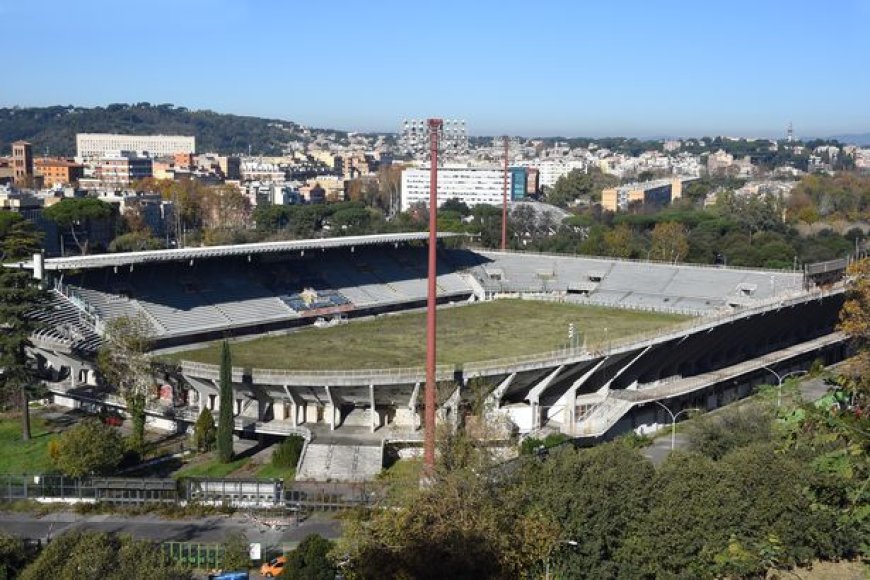
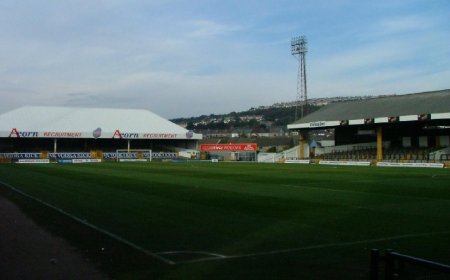
Italy's Stadio Flaminio once welcomed Six Nations fixtures for more than a decade – but the venue that Wales travelled to on several occasions is now abandoned and crumbling.
The 30,000-capacity arena in Rome first opened in 1959, in preparation for the 1960 Summer Olympic Games. Whilst it mainly served as a football venue, it began hosting rugby in 2000, coinciding with Italy's debut in the Six Nations.
During its time in use, it was the competition's most compact stadium, and was ultimately deemed too small when the national side relocated their key fixtures to the significantly larger neighbouring Stadio Olympico. Now, over a decade since Italian rugby departed in 2012, the stadium sits in ruins, though its future holds some promise.
Wales made their inaugural trip to the venue in April 2001, a year after Italy's Six Nations debut. The Dragons emerged victorious 33-23, with Gareth Cooper crossing the line once and Scott Gibbs scoring twice to secure the win.
In subsequent years, Wales – whose recent defeat to Italy proved to be the tipping point for now-former head coach Warren Gatland – experienced varied fortunes in Rome.
Italy claimed their maiden victory over Wales when they hosted the match in 2003 and achieved the same result four years later in 2007.
Conversely, Wales triumphed at the ground on three additional occasions, giving them a tally of four wins and two defeats at the now-derelict stadium. Throughout its history, the Stadio Flaminio has hosted notable sporting occasions.
During the 1989-1990 Serie A campaign, both Roma and Lazio temporarily made it their base whilst the Stadio Olimpico underwent refurbishment works.
The venue has also welcomed major music acts, with David Bowie performing before 45,000 spectators in 1987, whilst Pink Floyd and Bruce Springsteen have similarly graced its stage.
Though refurbished in 2008, the Stadio Flaminio has deteriorated significantly since rugby matches and regular music events ceased being held there.
Videos circulating on YouTube have documented the extent to which vegetation has reclaimed the site over the years.
Nevertheless, by 2021, optimism emerged that restoration might be on the horizon.
Come December 2024, Lazio president Claudio Lotito submitted to Rome's Mayor a long-standing proposal. The scheme detailed transforming Stadio Flaminio into a purpose-built 40,000-50,000-capacity venue for the historic club.
Whilst Lazio presently share facilities with city rivals Roma, this blueprint envisaged an exclusive stadium featuring a retractable roof alongside comprehensive regeneration of the wider vicinity.
Rome's mayor welcomed the preliminary scheme favourably, remarking: "President Lotito and his team showed us the pre-feasibility study for the renovation of the Flaminio stadium project. A beautiful project, it will have to be examined in detail, but we are happy that it has been announced that the proposal will be formally launched, thus triggering the administrative procedure.
"Now, we will work to examine it in detail. It seems that Lazio has moved from intentions to will to concrete facts. From here to a few hours we expect that what they presented to us, also with video, will become an official request with all the necessary documentation."
Lotito said during the celebrations of the club’s 126th anniversary earlier this year that the £370m project to rebuild the stadium is a 'top priority' for the club, stating that three years is a 'reasonable timeframe' to lay the first brick.
What's Your Reaction?
 Like
0
Like
0
 Dislike
0
Dislike
0
 Love
0
Love
0
 Funny
0
Funny
0
 Angry
0
Angry
0
 Sad
0
Sad
0
 Wow
0
Wow
0